What Does It Mean to Educate a Human Being?
Every educational system, whether consciously or unconsciously, answers a fundamental question: What kind of human being are we trying to produce?
Are we trying to produce workers? Examination machines? Technocrats? Followers? Or thoughtful, ethical, disciplined human beings capable of building families, communities, institutions, and civilizations?
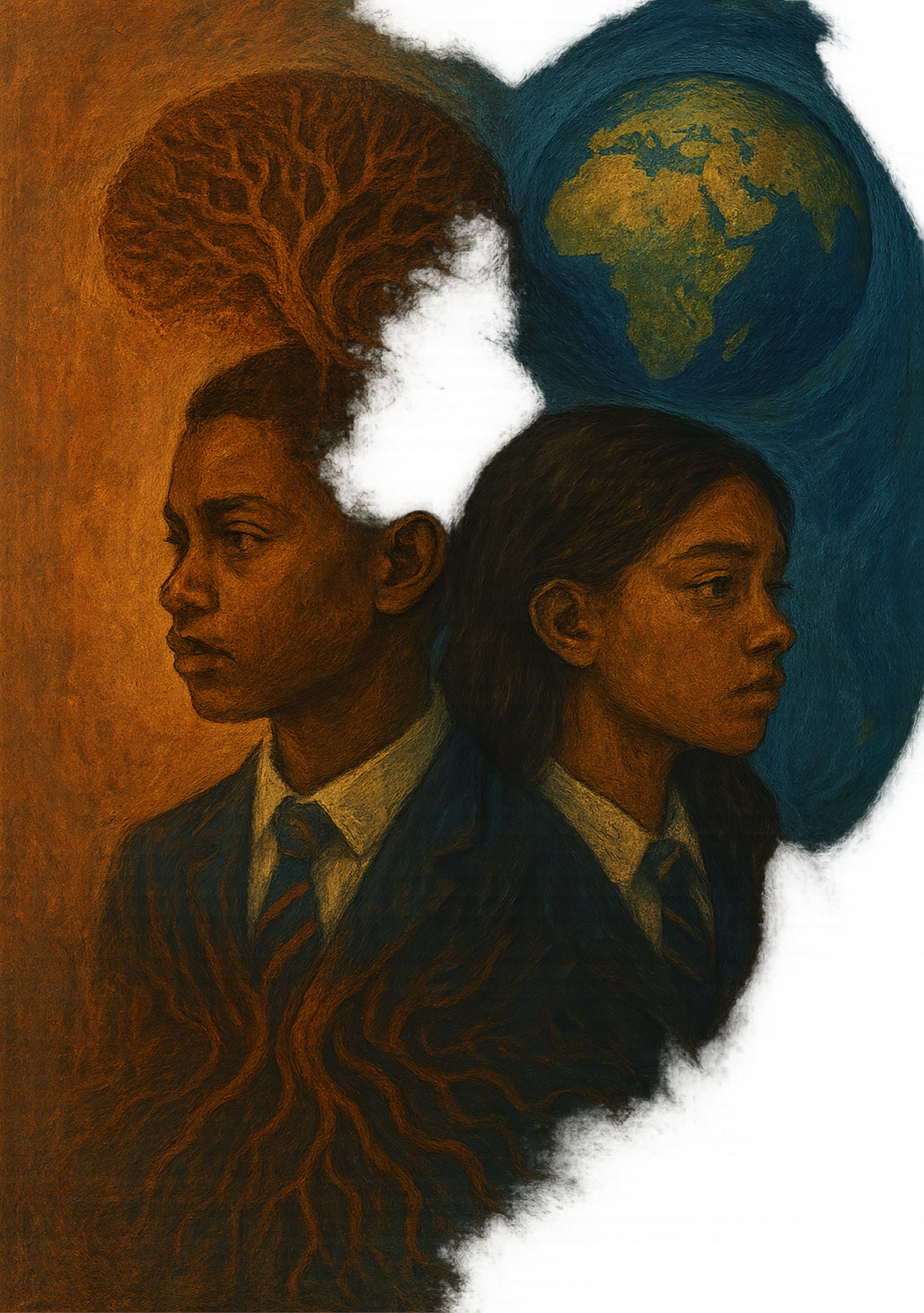
Our philosophy begins with a simple but often forgotten distinction: education is not the same as schooling, and schooling is not the same as information.
Education should not only prepare a child for a career. It should prepare a child for life, responsibility, and wisdom.
Education Is Not Information
Modern education systems are extremely good at delivering information. Students memorize facts, formulas, definitions, and procedures. But information alone does not transform a human being.
At Hikmah, we distinguish between four levels of learning — understanding that societies are ultimately sustained not by information, but by wisdom and character.
Data — facts, figures, dates, formulas, and definitions. A student can have a great deal of information and still be confused about life, ethics, and purpose.
Organised information — understanding how things work, how ideas connect, and how to apply what one has learned. Schools and universities are primarily designed to produce knowledge.
Knowing what is right, what is important, what is appropriate, and what is harmful. Wisdom involves judgment, balance, restraint, and the ability to see consequences. Wisdom cannot be memorized; it must be cultivated.
The ability to act correctly even when it is difficult. It includes honesty, discipline, patience, courage, humility, and responsibility. Without character, knowledge can become dangerous.
The Crisis of Modern Education
Across the world today, many educators and parents are beginning to recognize a quiet crisis. Students are becoming more educated, but not always more grounded. More connected, but not always more stable. More informed, but not always wiser.
Rootless Success
Many young people grow up successful in school but unsure of who they are, where they come from, and what they stand for. They can navigate the internet and global culture, but they sometimes lack a deep connection to their own cultural and intellectual heritage.
Identity Confusion
Young people today are exposed to hundreds of ideas, lifestyles, and belief systems online before they have formed a stable identity. Without guidance, this can lead not to openness, but to confusion, insecurity, or reactionary thinking.
Online Radicalization and Extremism
In the absence of wise teachers and balanced education, many young people learn about religion, politics, and identity from the internet, where the loudest voices are often the most extreme. Extremism rarely begins with religion; it begins with identity without wisdom, certainty without knowledge, and anger without discipline.
Loss of Cultural Continuity
Every civilization survives by passing on not only its language and customs, but its stories, proverbs, ethics, intellectual traditions, and worldview. When this chain is broken, young people may become materially successful but culturally and intellectually detached.
Education Without Ethics
Perhaps the greatest danger is education that produces intelligent people without moral responsibility. History shows that highly educated people are capable of building hospitals - and also capable of designing weapons, manipulating financial systems, or justifying injustice. Education must therefore include ethical formation, not just intellectual training.
Integrating Faith & Reason
In the classical Islamic intellectual tradition, there was no conflict between faith and reason, revelation and inquiry, religion and science. Scholars studied theology, law, mathematics, astronomy, medicine, philosophy, and literature.
Scholars such as Al-Ghazali wrote about the purification of the heart and the discipline of the intellect. Ibn Khaldun — the great North African thinker — emphasized that education must be gradual, humane, and connected to real life.
Hikmah draws inspiration from this tradition — where knowledge was not divided into "religious" and "worldly," but understood as part of a unified search for truth and understanding.
We also recognise that wisdom is not confined to one civilization. Philosophers such as Aristotle wrote about ethics and character. Confucius spoke about discipline, respect, family, and social responsibility. Across civilizations, thoughtful people have asked the same questions: What is a good life? What is justice? What is knowledge?

Integrating revelation and inquiry without conflict
Encouraging questions, discussion, and respectful debate
Rooting students in culture, heritage, and civilization
Building moral responsibility alongside intellectual excellence
Self-mastery as the foundation of freedom and achievement
Culture, Civilisation, & Identity
Hikmah draws inspiration from the great African intellectual traditions, including the universities and libraries of Timbuktu, where scholars from across Africa and the Muslim world studied law, language, mathematics, astronomy, and philosophy centuries ago.
Africa has its own long history of scholarship, ethics, and intellectual life, and our students should grow up aware that they are heirs to a rich civilizational heritage.
The Ghanaian and West African Intellectual Tradition is not something entirely new, nor is it imported from outside Africa. For centuries, scholars in West Africa studied law, theology, grammar, logic, mathematics, astronomy, poetry, and philosophy. Education was not limited to ritual instruction; it was concerned with ethics, society, governance, trade, scholarship, and spiritual development.
The Maliki school of jurisprudence — most prevalent in West Africa — has historically been known for its emphasis on public welfare, custom, context, and social stability.
This tradition of flexibility, pragmatism, and social awareness teaches students that law and ethics are not only about rules, but also about justice, balance, and the well-being of society.
Ghana has been particularly blessed with Islamic scholars and leaders who emphasized peace, unity, moderation, and national cohesion. One of the most respected figures in modern Ghanaian Islamic life is Sheikh Osman Nuhu Sharubutu, the National Chief Imam of Ghana, who has consistently promoted interfaith harmony, national unity, education, and peaceful coexistence.
Religion should make society more peaceful, more just, and more compassionate — not more divided.
Centuries before colonial education arrived, Timbuktu's Sankore and other institutions trained scholars in law, theology, astronomy, and philosophy — heirs to a rich civilizational heritage that belongs to every student at Hikmah.
Al-Ghazali wrote on the purification of the heart and discipline of the intellect. Ibn Khaldun emphasized education must be gradual, humane, and connected to real life. These traditions shape Hikmah's approach to wisdom and character.
Sheikh Osman Nuhu Sharubutu and other Ghanaian scholars have consistently modeled the scholar as a builder of society — promoting interfaith harmony, moderation, and national cohesion. Hikmah inherits this spirit.
The influence of Sufi traditions, including the Tijāniyya order, has been significant in Ghana and across West Africa. Their strong emphasis on character, humility, discipline of the ego, service to others, and spiritual refinement aligns closely with Hikmah's belief:
The purpose of knowledge is not argument, but character. The purpose of religion is not superiority, but humility.
Reform, Education, & Renewal
Throughout Islamic history, periods of renewal were not led by anger or isolation, but by education, scholarship, translation, debate, and intellectual revival. Ghana has also seen scholars and reformers who emphasized education, literacy, intellectual renewal, and the importance of engaging with the modern world.
Hikmah sees itself as part of this long tradition of renewal through education, where the response to modern challenges is not withdrawal, not hostility, and not blind imitation, but thoughtful, disciplined, confident engagement with the world.
Hikmah does not seek to replace existing madrasas, mosques, or Islamic schools. Ghana already has a rich and diverse Islamic educational landscape. Hikmah's role is different — to complement, to focus on character and leadership, and to serve as a model for modern Islamic education.
Our Educational Aim, Restated
Hikmah aims to complement existing institutions, work and collaborate with them. We focus on character, culture, philosophy, and leadership while providing structured weekend education for students in mainstream schools.
We encourage students to ask questions, to think, to discuss, and to respectfully disagree. A confident student is not one who memorizes the most, but one who can think clearly, speak respectfully, and listen carefully.
We want our students to be able to sit in any room — whether in Accra, London, Dubai, or New York — and speak intelligently about their faith, their culture, their society, and the world.
Freedom without discipline leads to chaos. Knowledge without discipline leads to arrogance. Hikmah places strong emphasis on time management, responsibility, self-control, respect for parents and teachers, and commitment to work.
Ultimately, Hikmah aims to nurture students who will become leaders in their professions, communities, and families — not through loudness or dominance, but through responsibility, integrity, calm judgment, and the ability to bring people together.
Every society eventually becomes what it teaches its children.
Education is an act of civilizational responsibility — not just a preparation for examinations.
At Hikmah, we try — in our own small way — to educate not only the mind, but also the character, the identity, the imagination, and the conscience. We believe that if we succeed in this, even partially, our students will grow up not only as successful individuals, but as thoughtful human beings who build families, communities, institutions, and societies with wisdom, discipline, and compassion.
And that, ultimately, is the purpose of education.