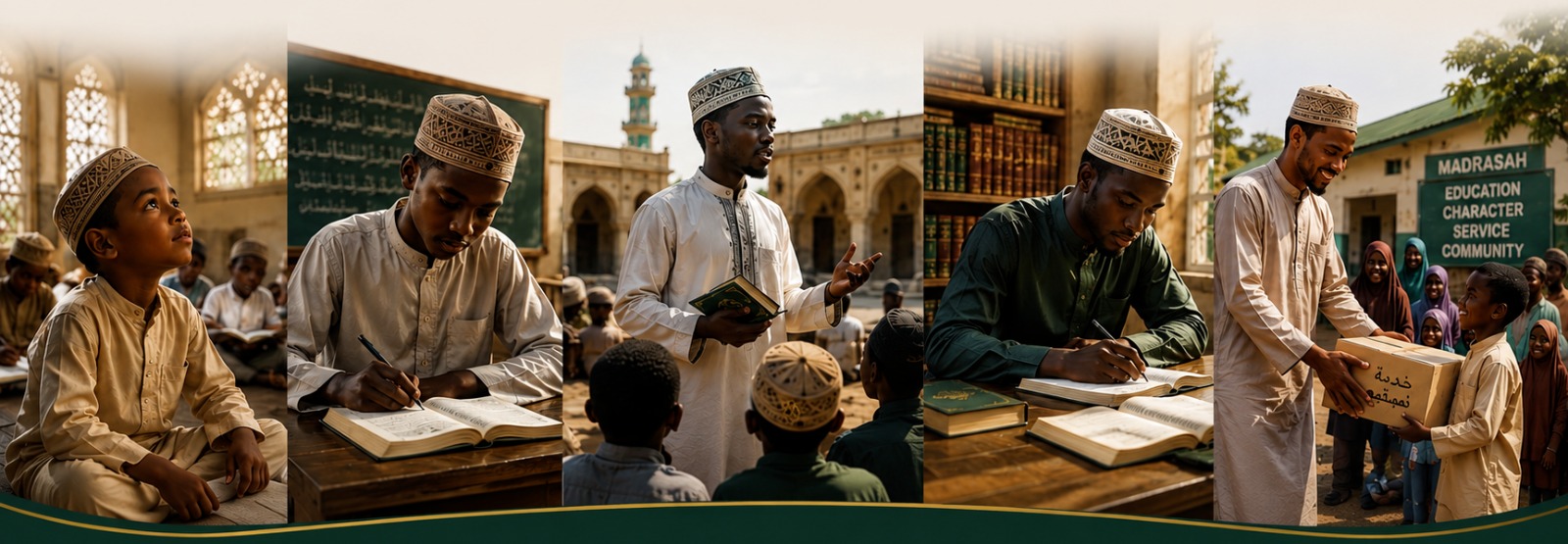
At this stage, children are naturally curious, imaginative, and emotionally receptive. The goal is not heavy instruction, but love, familiarity, joy, and good habits. Children at this age should associate faith, culture, language, and learning with warmth, stories, music, kindness, and belonging — not fear or pressure. The Little Star program therefore focuses on joyful foundations.
Core Areas of Learning
Stories and Moral Imagination
Children are introduced to stories of prophets, wise people, Ghanaian folktales, and stories that teach kindness, honesty, courage, patience, and generosity. Stories are one of the oldest and most powerful ways of teaching values.
Arabic Basics
Students learn the Arabic alphabet, simple words, short surahs, and basic phrases in a fun and engaging way through songs, games, calligraphy, and reading practice. The aim is familiarity and confidence, not pressure.
Qur'anic Literacy
level specific instruction on Aqidah, Fiqh, Hadith & Sunnah, Akhlaq & Seerah; getting children to learn what to learn from religion, and not follow it radically.
Ghanaian Culture and Heritage
Students learn about Ghanaian proverbs, festivals, respect for elders, community values, traditional stories, and cultural practices. They begin to understand that they are part of a history and a culture, not just a modern city or a school system.
Habits and Respect
Character is built through habits. Students are taught punctuality, greeting properly, respect for parents and teachers, tidiness, sharing, honesty, and responsibility in simple daily actions.
Friendship and Kindness
Children learn how to be good friends, how to share, how to apologize, how to forgive, and how to treat others with kindness and fairness.
Outcome of the Little Star Stage
This stage is about planting seeds, not delivering lectures.

